
Potholes are not just annoyances on the road; they’re a result of a complex interplay of various factors, making them a significant concern for both drivers and local authorities. Even on newly constructed roads, where one might expect pristine surfaces and minimal issues, the appearance of potholes can surprise both drivers and authorities alike. Despite thorough planning and quality control measures applied during construction, various factors may still contribute to the development of potholes on newly built roads. In this discussion, we explore the complex mechanisms responsible for the formation of potholes, examine the factors that contribute to their development, and understand why they occur throughout the year. Understanding these processes is crucial for effective road maintenance and ensuring safer driving conditions for everyone on the road.
The Science Behind Potholes
Potholes are depressions or holes that form on road surfaces due to a combination of factors such as weather conditions, traffic load, and the quality of road construction. They vary in size and depth, ranging from minor inconveniences to significant hazards for drivers. Typically, they develop when water seeps into cracks in the road surface, freezes, expands, and then thaws, causing the pavement to weaken and break apart. The continual passage of vehicles over these weakened spots exacerbates the deterioration, eventually leading to the formation of potholes.
Consider this analogy: When water freezes in an ice cube tray, it expands, causing the ice to push against the tray’s boundaries. Similarly, when water infiltrates the ground beneath the pavement, especially in colder climates, it undergoes expansion upon freezing. This expansion exerts pressure on the pavement, leading to cracks and compromises in its structure.
As temperatures rise and the ice melts, the pavement contracts, leaving voids beneath its surface. These voids act as reservoirs for accumulating water, exacerbating the problem. With each freeze-thaw cycle, the pavement weakens further, which sets the stage for potholes to form.
Understanding the Formation of Potholes
Water Seepage
Potholes form when water from snow or rain seeps into the ground beneath the road, weakening the pavement. This water weakens the road's foundation, especially during freezing temperatures, leading to cracks and fissures. As the ice melts, the pavement contracts, leaving voids beneath the surface. These voids accumulate water, worsening the problem and accelerating hole formation.
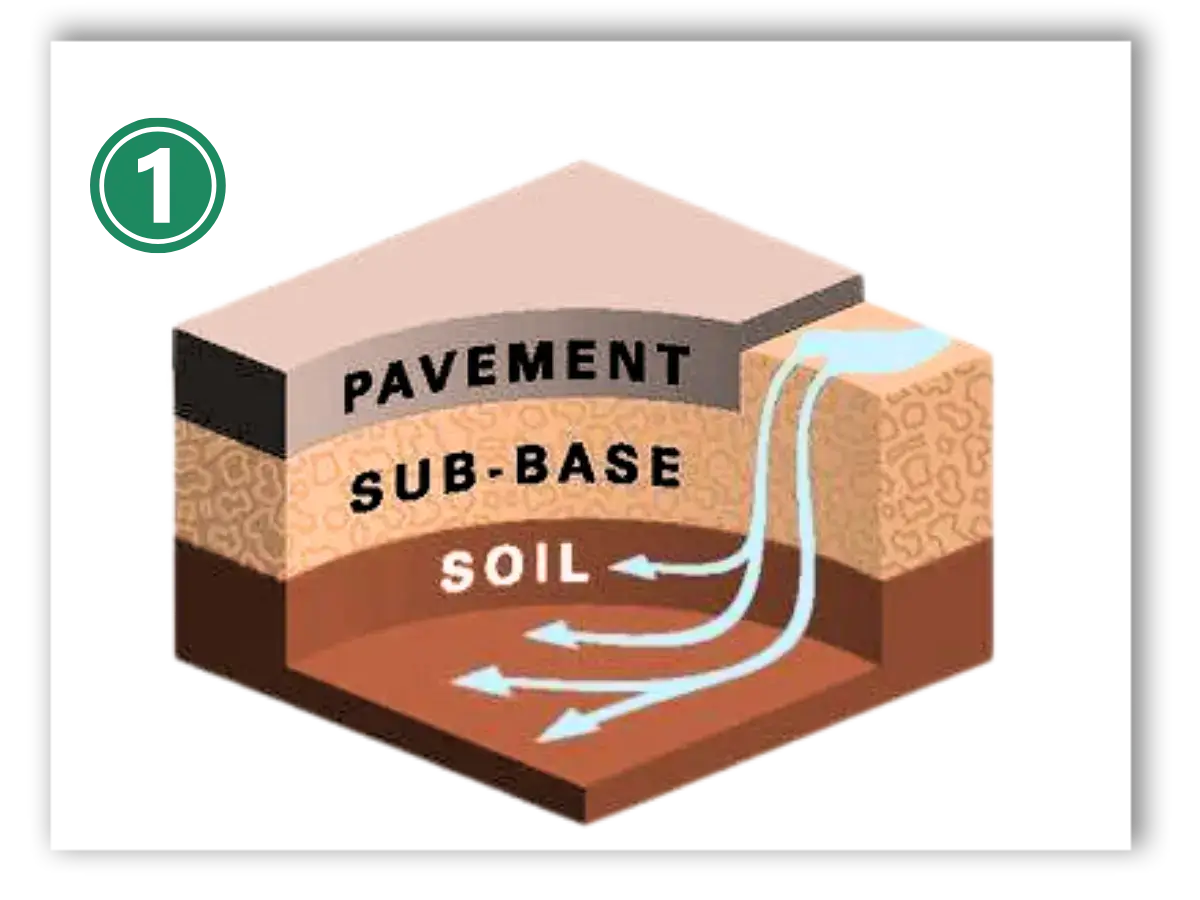
Freeze-Thaw Action
As temperatures drop, the moisture in the soil freezes, causing the ground to expand and push against the pavement. This upward pressure further damages existing cracks and weak spots in the pavement. As the frozen soil expands, it adds stress to the pavement's underside, leading to more cracks and fissures. This continuous cycle of freezing and thawing worsens the pavement's condition and increases the chances of potholes forming.

Spring Thaw
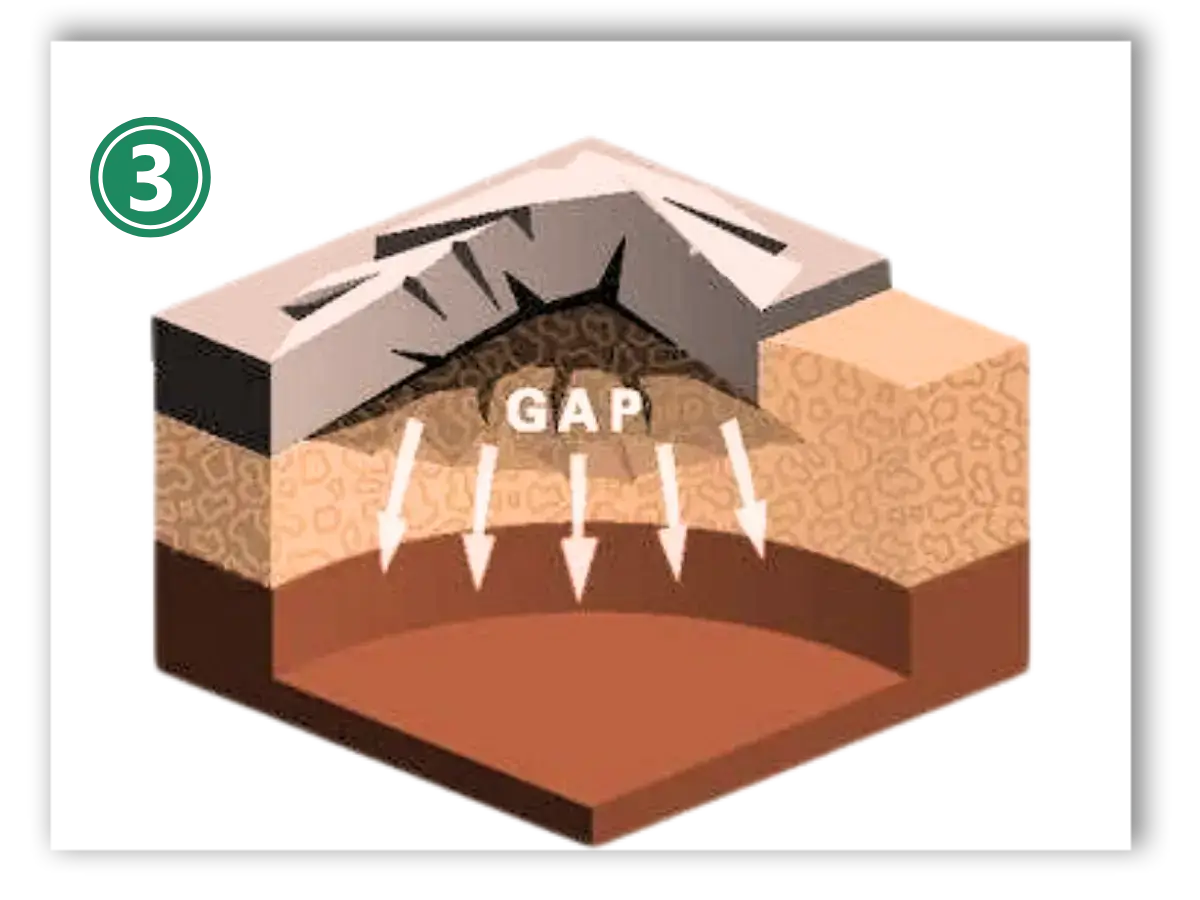
As temperatures begin to rise, the ground gradually returns to its normal level through the process of settling. However, the pavement often remains elevated, failing to fully readjust, which creates a noticeable gap between the pavement and the ground below.
Traffic Stress
When vehicles traverse over this void, the stress placed on the pavement surface exacerbates existing cracks, causing sections of the pavement to collapse into the underlying hollow space. This process not only deepens the hole but also widens its diameter, contributing to the formation of yet another pothole.

Advanced Pothole Prevention Technology
Addressing pothole concerns demands innovative solutions that go beyond traditional patch-up jobs. Water, often pinpointed as the chief culprit behind pavement deterioration, poses a formidable challenge to road integrity. Over time, unbound granular pavements become increasingly susceptible to potholes, particularly when subjected to inadequate maintenance practices. However, in-situ stabilisation presents a promising solution for improved durability and moisture resistance, reducing susceptibility to water damage by utilising existing materials enhanced with advanced nanopolymer additives.
A notable example of this technology in action is the Renolith case study on the Brenner Autobahn. This revolutionary method not only prevents potholes from forming but also provides a sustainable, long-term solution to road construction and rehabilitation. By bolstering road resilience, even in the face of adverse weather conditions and heavy traffic loads. It ensures smoother and safer journeys, guaranteeing that travelers experience smoother rides and safer travels, free from the inconvenience and hazards typically associated with deteriorating road conditions. Embracing this technology shows that we’re taking action to preserve roads, making our infrastructure more resilient and sustainable.